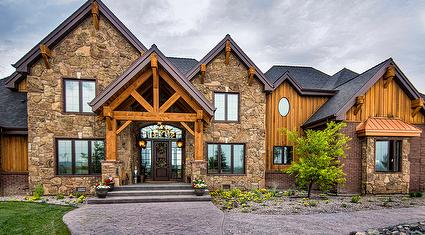
Striking color variation and clear, tight grain make Trestlewood's Picklewood Cypress Millwork Stock a popular reclaimed lumber option.
| Species | Cypress. |
| Source | Pickle vats salvaged from different sites in North America. Cypress Picklewood lumber can come from any combination of staves and bottoms. Weathered staves lumber often has banding marks on the surface; resawn staves lumber can have dark streaking/staining/color variation. Weathered bottoms lumber generally has a smoother texture than weathered staves lumber and does not have banding marks to speak of; resawn bottoms lumber generally has less color variation than resawn staves lumber. |
| Holes | Occasional small nail holes; no visible bolt holes (boards were sometimes assembled with wood dowels so there can be some dowel holes on the edge) |
| Knots | 90% clear. Some boards will have pin knots. |
| Checking/Cracks | Unlimited as long as board is sound; end cracks to extend no more than 6" into board; some boards have dark checking, making them ideal for a distressed millwork product |
| Grain Pattern | Tight grain; Mixed |
| Moisture Content/Stability | Air-Dried (varying amounts.) Kiln drying is generally available as an option (Cypress Picklewood lumber should be assumed to not be kiln dried unless it is specifically quoted as being kiln dried.) |
| Standard Dimensions | Depends on specific product quoted: (1) Weathered (As-Is) Lumber: generally 1.5-3" thick (up to 1/2" nominal); primarily 3-6" wide (up to 3/4" nominal); and random lengths, primarily 8' and under. (2) Resawn Lumber: generally 1" thick (actual 5/8" to 1"); primarily 3-6" wide (up to 3/4" nominal); and random lengths, primarily 8' and under. (3) Thin Middles: mixed 1/4-1/2" (3/8" +/- 1/8"); primarily 3-6" wide; and random lengths, primarily 8' and under. |
| Weight | Typically, approximately 3 pounds per board foot |
| Surfacing | Depends on specific product quoted. Surfacing options can include Weathered As-Is, Band-Sawn and Planed (S4S). 1" Cypress Picklewood Lumber is often quoted/supplied with 1 weathered (as-is) face and 1 band-sawn face. |
| Salt/Minerals | Picklewood materials contain significant amounts of salt and other minerals, creating special characteristics and/or considerations like those described in the following items. |
| Color/Appearance | The coloring of individual Picklewood boards varies widely. Weathered faces can include a range of grays and browns (the exterior of the pickle vats generally weathered to grays, while the interior generally weathered to browns.) Processed Picklewood materials have color variations which range from normal Cypress coloring to color combinations unique to Picklewood materials. |
| Finishes/Glues | Certain finishes and glues do not work well with Picklewood materials. Most importantly, DO NOT USE WATER-BASED FINISHES. |
| Metal Corrosiveness | Picklewood materials can have a corrosive effect on metal fasteners, machinery and saw blades. Stainless steel fasteners should be used in lieu of regular steel fasteners, especially in applications involving the likely mixing of Picklewood, moisture and oxygen. |
| Moisture | Picklewood absorbs moisture more readily than typical Cypress. Picklewood material (especially material with air dry or kiln dry time) should be handled, stored and transported carefully to minimize any unnecessary reabsorption of moisture. |
| Odor | Picklewood materials often have a strong pickling smell to them. This odor is especially strong as wet material is being cut or otherwise processed. It tends to become less and less of an issue as material is allowed to air dry (or as material is kiln dried). |
| Salt Leaching | As moisture is drawn out of Picklewood materials, it brings salt with it. Salt leaching tends to be the most concentrated at knots and material ends, but can happen anywhere. Air dry time (and kiln drying) reduces, but does not eliminate, salt leaching. Approaches to salt leaching include sanding and refinishing impacted areas to doing nothing (and letting the salt serve as one of the most visible evidences of the history and reclaimed nature of Picklewood materials.) Salt is more visible on processed materials than on as-is materials. |
| Appearance Variation | Boards can vary in appearance from piece to piece and even within a piece. The characteristics described on this specification sheet generally apply to each board's featured face. The opposite face and edges can differ from the featured face in texture, coloring, and other characteristics unless otherwise noted. Weathered lumber / barnwood will have at least one weathered face. The opposite face and edges can be any combination of weathered and fresh-sawn. If weathered, the weathering will often be different (amount, mix of colors, etc) than on the featured face. Trestlewood sometimes uses one or more juicing processes to help fresh-sawn and/or less weathered/aged faces/edges blend in with weathered faces/edges. All else being equal, juicing is more likely to be used in situations where (a) lumber is cut from timbers or wider lumber (thereby creating fresh-cut faces and/or edges); (b) Buyer wants all (or most) faces/edges to be weathered/aged; (c) Buyer desires to increase the consistency of the weathered/aged look from face to face; and/or (d) Buyer wants a darker weathered look. |